Noise And Sleep: The Basics
Noise affects sleep through both sound intensity and timing, because the brain responds even when you do not fully wake up. In lab studies, brief noise bursts can trigger micro-arousals that fragment sleep stages, which often shows up as feeling unrefreshed the next day.
Two measurable facts guide practical decisions. First, the American Academy of Sleep Medicine lists noise as a factor that can disturb sleep, and many sleep hygiene recommendations target a bedroom around 30 dB to 45 dB for comfort. Second, the World Health Organization’s environmental noise guidance links long-term exposure to health outcomes, including sleep disturbance, with traffic noise commonly exceeding those bedroom targets.
In real homes, the problem rarely comes from one constant sound. A car passing at 2 a.m. creates a short peak above the background, a partner’s snoring may repeat every 30–60 seconds, and HVAC rumble can mask quiet moments. Those patterns matter because your auditory system adapts to steady noise more than to sudden changes.
As a practical aside, I often see people measure noise with a phone app and then trust the number without checking the microphone setting; on iOS, for example, some apps label readings as “A-weighted” (dBA), which changes how the number maps to perceived loudness.
Main Problems People Face
Many people treat noise as a single problem—“it’s loud”—instead of a pattern problem. Sudden peaks (like a door slam or a truck) tend to cause more arousals than a steady background at the same average level, because the brain’s arousal threshold is lower when the sound is unexpected.
Another common mistake is relying on “sleeping through it” while the body stays in a lighter sleep state. Noise can raise sympathetic nervous system activity, which increases alertness and can worsen insomnia symptoms over time. People then compensate by going to bed earlier, which can backfire when the noise continues to fragment sleep.
Some situations also create a dependency chain. If you fall asleep with earbuds playing audio, you may reduce awareness of noise peaks, but you also risk overexposure to sound levels and you may train your brain to need the audio to fall asleep. If you use a white-noise device, you may mask noise but still get disturbed by peaks that exceed the masking level.
There is also a biological timing angle. Sleep is not uniform across the night; arousal thresholds vary by sleep stage, and noise during lighter stages can cause more awakenings. That means the same sound can feel tolerable early in the night and disruptive later, especially if the noise pattern changes.
Supporting technologies can help, but they have limits. Active noise canceling (ANC) headphones reduce steady low-frequency noise well, yet they often struggle with high-frequency, sharp sounds like voices or intermittent impacts. Earplugs reduce sound transmission, but fit quality determines how much they help.
Solutions And Advice That Work
Measure Noise With A Plan
Start by measuring noise for 3–7 nights, not one night, because traffic and neighbors often vary by day. Use a phone app that reports dBA and record the time of the loudest peaks. If you can, place the phone near where your head rests, because noise levels can differ by 5–10 dB across a room.
Why it works: you match interventions to the pattern. If your biggest issue is peaks, you prioritize peak reduction (earplugs, window sealing, or masking with enough headroom). If your issue is steady rumble, you prioritize ANC or background masking.
What it looks like in practice: you might find that your bedroom averages 42 dBA but peaks at 60–70 dBA at specific times. That result often explains why “average” noise feels worse than expected.
Tool note: if you use a phone app, check whether it uses A-weighting (dBA). A-weighting approximates human hearing sensitivity, so it aligns better with perceived loudness than unweighted readings.
Use Masking With Enough Headroom
Masking works best when the masking sound covers the frequency range of the disturbance and stays below a level that harms comfort. Many people start with a fan or a white-noise app and then keep the volume too low, which leaves the peaks still audible.
Why it works: masking reduces contrast between background and peaks, which raises the chance that your brain treats the sound as “background.” A steady masking signal also reduces the surprise element that triggers arousals.
What it looks like in practice: set the masking so that quiet speech-like sounds are less distinct, yet you can still hear your alarm. If you use headphones, keep volume low; a safer approach is a speaker placed away from the pillow.
Realistic outcome: people often notice fewer awakenings within 1–3 nights, but sleep depth changes can take longer because your brain adapts to the new sound environment.
Choose Earplugs And Fit Matters
Earplugs reduce sound transmission, and fit quality often determines the difference between “some help” and “noticeable improvement.” Foam earplugs expand to fill the ear canal, while silicone plugs rely on a stable seal. If you feel pressure or discomfort, you may have a poor fit or an incorrect size.
Why it works: a good seal reduces both average sound and peaks, which lowers the probability of micro-arousals. Even small improvements in attenuation can matter when noise peaks are frequent.
What it looks like in practice: you insert the plug, hold it in place for the manufacturer’s recommended seconds, and then check for leaks by moving your jaw or turning your head. A version number aside: many foam plugs are sold in multiple sizes or “reusable” lines, and the packaging instructions change by product line.
Outcome expectations: some users report better sleep within a week, but if you have ear infections, significant earwax buildup, or pain, you should stop and get medical advice.
Block Peaks With Room Changes
Room changes target the physical path of sound. Weatherstripping around doors, sealing window gaps, and adding mass (like heavy curtains) can reduce transmission, especially for mid-frequency noise from streets and voices.
Why it works: sound reduction depends on how much the structure vibrates and how many gaps exist. A small gap under a window can dominate the sound you hear, even if the window glass looks intact.
What it looks like in practice: after sealing, re-measure with your phone app at the same times. If peaks drop by 5 dB or more, you often feel the difference quickly because the peaks are what wake you.
Realistic limitation: you will not eliminate low-frequency traffic rumble with curtains alone; that typically needs heavier barriers or changes to the building envelope.
Time Your Sleep Routine Around Noise
Noise timing can guide your schedule. If the loudest peaks occur between 1:00–3:00 a.m., you can reduce exposure by adjusting bedtime earlier or later by 30–90 minutes, then reassessing for 1–2 weeks.
Why it works: you reduce the overlap between your most vulnerable sleep window and the noise peaks. Sleep stage distribution changes across the night, so shifting bedtime can change which stages coincide with the disturbance.
What it looks like in practice: you keep a consistent wake time, adjust bedtime gradually, and track awakenings. If the noise pattern is fixed (construction starts at 7:00 a.m.), you can also plan for a short “buffer” period before the wake time.
Outcome expectations: schedule shifts help when noise is predictable; they help less when noise is random or constant.
Use ANC Carefully For The Right Noise
ANC can reduce steady low-frequency noise, such as HVAC hum or continuous engine rumble, but it often underperforms for sudden impacts or speech. If you try ANC, test it during the exact noise events that disturb you.
Why it works: ANC uses microphones and speakers to generate an opposing sound wave, which works best when the noise is predictable and within the device’s frequency range.
What it looks like in practice: you wear the headphones at bedtime and note whether the loudest peaks still break through. If they do, you may need earplugs plus masking, or room sealing.
Mild frustration point: many people buy ANC for “traffic noise” and then discover it helps the hum but not the honks.
Protect Hearing And Avoid Over-Listening
When you use masking audio, keep volume low enough that you can still hear your alarm and you do not feel the need to turn it up every night. Prolonged exposure to high sound levels can harm hearing, and hearing changes can worsen how noise feels over time.
Why it works: hearing protection preserves your auditory system’s sensitivity and reduces the risk of long-term damage. It also prevents a cycle where you rely on louder audio to overcome the same noise.
What it looks like in practice: you set a maximum volume and stop adjusting after the first few nights. If you use earbuds, consider switching to a speaker or a dedicated white-noise device placed farther from the head.
Realistic outcome: most people can find a comfortable level within 2–4 nights, but if you need constant increases, reassess the masking strategy or ear protection.
Case Examples From Realistic Scenarios
Traffic Peaks Near A Window
A person in an apartment reports waking during late-night truck passes. Their phone measurements show average bedroom noise around the low 40s dBA but peaks near 65 dBA when trucks pass. They seal the window gaps and add heavy curtains, then re-measure and see peak reductions of several dB. They also use foam earplugs on peak nights and a fan for background masking. After 1 week, they report fewer awakenings, with the biggest improvement on nights when the truck schedule matches the peak times.
Snoring And Partner Noise
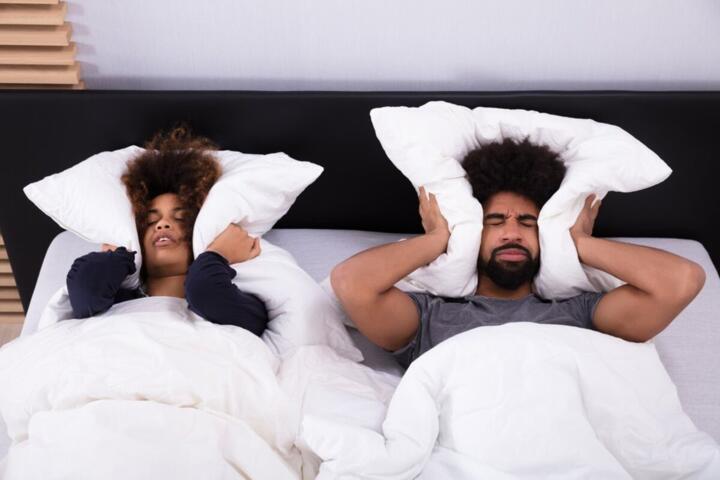
A couple shares a bedroom where snoring occurs most nights and varies by position. One partner tries white noise at a low volume and still wakes during the loudest snoring bursts. They switch to a masking level that reduces the distinctness of snoring peaks, then add silicone earplugs for the nights when snoring is worst. They keep the wake time consistent and avoid turning the masking up repeatedly. Over about 10 days, the partner reports fewer awakenings and less “startle” response, while still hearing the morning alarm.
Noise Sleep Checklist And Tradeoffs
| Situation | Likely Best First Step | What To Watch For | Time To Reassess |
|---|---|---|---|
| Intermittent peaks (honks, doors, construction) | Earplugs with a good seal + masking | Ear discomfort or leaks; masking too quiet | 3–7 nights |
| Steady rumble (HVAC, distant rail hum) | Masking or ANC (tested during the hum) | ANC may not reduce peaks; volume creep | 5–10 nights |
| Noise enters via gaps (window/door) | Weatherstripping + gap sealing | Re-measure; curtains alone may not fix low-frequency rumble | 1–2 weeks |
| Partner noise (snoring, talking) | Masking tuned to reduce peak distinctness | Over-reliance on audio; hearing alarm | 7–14 nights |
If you want a step-by-step checklist, use this order: measure for 3 nights → identify peak times → try one intervention (earplugs or masking) → re-measure or track awakenings → add a second intervention (room sealing or ANC) only if peaks remain.
Common Mistakes That Backfire
People often choose earplugs that feel comfortable but do not seal. A small leak can reduce attenuation enough that the loudest peaks still trigger arousals, and the person concludes that “earplugs don’t work.”
Another mistake is setting masking volume too low. If the masking barely covers the background, the peaks still stand out, and the brain continues to respond to contrast.
Some people rely on ANC alone for intermittent sounds. ANC devices typically handle steady noise better than sudden impacts, and the mismatch leads to disappointment and repeated returns.
There is also a schedule trap. Going to bed earlier to “get more sleep” can increase time spent in lighter sleep stages during peak noise, which can worsen fragmentation rather than improve it.
Finally, people sometimes ignore hearing safety. If you use earbuds or headphones at a level that makes you feel you “need” it to sleep, you risk a volume escalation pattern that is hard to reverse.
FAQ
How Loud Is Too Loud For Sleep?
Bedroom targets vary by person, but many sleep recommendations aim for a quiet room in the 30–45 dBA range. If your bedroom peaks repeatedly above your comfort level, you will likely benefit from peak-focused strategies like earplugs or sealing gaps.
Do White Noise Machines Work For Traffic?
They can help when traffic noise includes steady components and when the masking level reduces the distinctness of peaks. If honks or intermittent impacts remain clearly audible, masking alone often falls short.
Are Earplugs Better Than ANC Headphones?
Earplugs often reduce both average noise and peaks when fit is good, while ANC tends to work best for steady low-frequency noise. Many people get the best results by combining earplugs with background masking for peak-heavy environments.
Can Noise Cause Long-Term Sleep Problems?
Repeated sleep fragmentation can worsen insomnia symptoms and increase next-day fatigue. If noise exposure is persistent and sleep remains poor after targeted changes, a clinician can help evaluate insomnia, anxiety, or other contributors.
When Should I Seek Medical Help?
Seek help if you have persistent insomnia for more than a few weeks despite noise interventions, loud snoring with choking or breathing pauses, or daytime impairment that affects work or driving. A clinician can also check for conditions like sleep apnea.
Author's Insight
Noise management works best when you treat it as a measurable pattern: average level, peak timing, and frequency mix. Phone dBA readings are imperfect, but repeated measurements paired with a simple sleep log often identify whether peaks or steady rumble drive awakenings.
Earplugs and masking target different mechanisms, so combining them can reduce both contrast and transmission when peaks are frequent. Room sealing helps when sound enters through gaps, and it tends to produce more stable improvements than relying on louder audio.
One practical lesson from many real-world adjustments is that people improve faster when they change one variable at a time and reassess after 3–10 nights, rather than stacking multiple changes and guessing which one helped.
Key Takeaways
- Noise disturbs sleep through peaks and timing, not just average loudness.
- Measure for several nights and focus on peak times to choose the right intervention.
- Earplugs help most when fit seals well; masking helps most when it reduces peak contrast.
- Room sealing reduces sound transmission when gaps exist, while ANC works best for steady low-frequency noise.
- Track awakenings and hearing comfort for 1–2 weeks, then adjust; persistent problems deserve medical evaluation.